
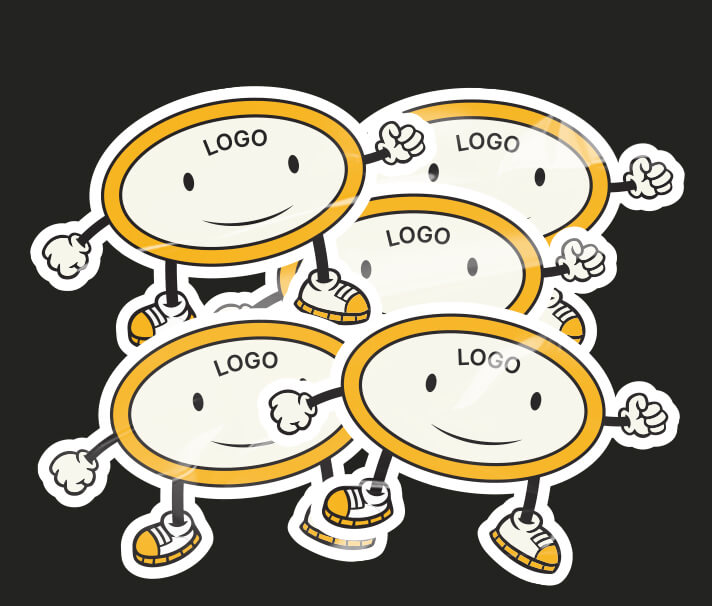
Why one logo isn’t enough anymore
January 29, 2026
There used to be a time, long before the internet and social media were huge, when you could just design a logo and that would be it…done!
However, nowadays, even smaller businesses need to think differently and strategically. Sure you could get just one logo design for your company, but how’s that going to look in every single place where your logo appears? For example, a big sponsor logo on the side of a racing car livery is going to need a much longer version than one on a football shirt to achieve a more visible stance.
When brand design is done properly, it covers different possible scenarios by not just creating a single logo, but instead a logo suite. A collection for the marketing team to have in their arsenal.
Here’s a few examples of logos that you might find in a logo suite:
Primary lockup
This will literally be your main logo…the one most commonly used. It will usually include both the company name and the emblem, if your main lockup uses both.
Secondary lockup
Like how I mentioned about the car livery and the football shirt, the secondary logo is the opposite orientation than the primary logo. For example, if your main primary logo is more landscape, the secondary logo will be more portrait or ‘stacked’, usually with the text sitting under the emblem as an opposed to next to it.
You’d use this when the area that your logo will sit doesn’t lend itself for the primary logo to have maximum exposure.
Wordmark
The wordmark is basically the text part of the logo, separated from the emblem. Sometimes this is a standard font and other times when the company wants to be more unique, it will have a custom style of text designed. Some companies even have whole fonts made up for them that they can use elsewhere, like headings.
This version of the logo will be used when the designer or marketing team feel it’s needed, for example if they want to give a more subtle or elegant vibe perhaps.
Some companies’ logos consist of just a wordmark and no emblem, for example Vans and Disney.
Emblem (or logo mark)
The opposite to the wordmark, this is simply the ‘image’ part of the logo design, separated from the wordmark.
It’s commonly used in smaller areas where any text might be hard to read, like a clothing label for example.
Avatar
Some logo suites might also include an avatar. This is a more simplified version of the emblem designed to work when even smaller.
Examples of where an avatar might be used are for social media profiles and website favicons. If the emblem looks fine and recognisable when this small, then the emblem will be fine for these applications.
Solid versions of all the above
Solid versions are black and white versions of the logo and maybe even one solid brand colour. Each of the previous variations should be presented in solid colours
Alternative versions or fun adaptations
These are not always needed, but alternative versions are more likely to appear more in some genres of clothing, music or anywhere that a company might want to give variety of identities. A good example of this is how Adidas uses its older, retro looking logo for certain items of apparel. This is a common trend in clothing and some logos might be more of an illustration to appear more engaging for that piece.
File formats
As well as different logo variations in the logo suite, all professional graphic designers will provide a few different file types for each variation. It’s best to have both vector and raster file types which I explain about in my blog article, here. I personally provide vector SVG and PDF files for printing and raster PNG files for web.
At the end of the day, logo design has evolved greatly. If you’re just starting out that can all seem a bit daunting and you could easily get away with just one logo design, but if you plan on expanding then it’s always best to keep this in mind so it’s easier to evolve your brand identity as your company grows, but a good designer will take note of your overall vision.
Need a collection of logos designed?...Get in touch, or take a glance at my portfolio.

Adam Hayles
Freelance Graphic Designer
15+ years in the graphic design world with a desire to provide brands with a fresh upbeat visual personality using design, illustration and animation.
Why one logo isn’t enough anymore
January 29, 2026
There used to be a time, long before the internet and social media were huge, when you could just design a logo and that would be it…done!
However, nowadays, even smaller businesses need to think differently and strategically. Sure you could get just one logo design for your company, but how’s that going to look in every single place where your logo appears? For example, a big sponsor logo on the side of a racing car livery is going to need a much longer version than one on a football shirt to achieve a more visible stance.
When brand design is done properly, it covers different possible scenarios by not just creating a single logo, but instead a logo suite. A collection for the marketing team to have in their arsenal.
Here’s a few examples of logos that you might find in a logo suite:
Primary lockup
This will literally be your main logo…the one most commonly used. It will usually include both the company name and the emblem, if your main lockup uses both.
Secondary lockup
Like how I mentioned about the car livery and the football shirt, the secondary logo is the opposite orientation than the primary logo. For example, if your main primary logo is more landscape, the secondary logo will be more portrait or ‘stacked’, usually with the text sitting under the emblem as an opposed to next to it.
You’d use this when the area that your logo will sit doesn’t lend itself for the primary logo to have maximum exposure.
Wordmark
The wordmark is basically the text part of the logo, separated from the emblem. Sometimes this is a standard font and other times when the company wants to be more unique, it will have a custom style of text designed. Some companies even have whole fonts made up for them that they can use elsewhere, like headings.
This version of the logo will be used when the designer or marketing team feel it’s needed, for example if they want to give a more subtle or elegant vibe perhaps.
Some companies’ logos consist of just a wordmark and no emblem, for example Vans and Disney.
Emblem (or logo mark)
The opposite to the wordmark, this is simply the ‘image’ part of the logo design, separated from the wordmark.
It’s commonly used in smaller areas where any text might be hard to read, like a clothing label for example.
Avatar
Some logo suites might also include an avatar. This is a more simplified version of the emblem designed to work when even smaller.
Examples of where an avatar might be used are for social media profiles and website favicons. If the emblem looks fine and recognisable when this small, then the emblem will be fine for these applications.
Solid versions of all the above
Solid versions are black and white versions of the logo and maybe even one solid brand colour. Each of the previous variations should be presented in solid colours
Alternative versions or fun adaptations
These are not always needed, but alternative versions are more likely to appear more in some genres of clothing, music or anywhere that a company might want to give variety of identities. A good example of this is how Adidas uses its older, retro looking logo for certain items of apparel. This is a common trend in clothing and some logos might be more of an illustration to appear more engaging for that piece.
File formats
As well as different logo variations in the logo suite, all professional graphic designers will provide a few different file types for each variation. It’s best to have both vector and raster file types which I explain about in my blog article, here. I personally provide vector SVG and PDF files for printing and raster PNG files for web.
At the end of the day, logo design has evolved greatly. If you’re just starting out that can all seem a bit daunting and you could easily get away with just one logo design, but if you plan on expanding then it’s always best to keep this in mind so it’s easier to evolve your brand identity as your company grows, but a good designer will take note of your overall vision.
Need a collection of logos designed?...Get in touch, or take a glance at my portfolio.
Adam Hayles
Freelance Graphic Designer
15+ years in the graphic design world with a desire to provide brands with a fresh upbeat visual personality using design, illustration and animation.


Why one logo isn’t enough anymore
January 29, 2026
There used to be a time, long before the internet and social media were huge, when you could just design a logo and that would be it…done!
However, nowadays, even smaller businesses need to think differently and strategically. Sure you could get just one logo design for your company, but how’s that going to look in every single place where your logo appears? For example, a big sponsor logo on the side of a racing car livery is going to need a much longer version than one on a football shirt to achieve a more visible stance.
When brand design is done properly, it covers different possible scenarios by not just creating a single logo, but instead a logo suite. A collection for the marketing team to have in their arsenal.
Here’s a few examples of logos that you might find in a logo suite:
Primary lockup
This will literally be your main logo…the one most commonly used. It will usually include both the company name and the emblem, if your main lockup uses both.
Secondary lockup
Like how I mentioned about the car livery and the football shirt, the secondary logo is the opposite orientation than the primary logo. For example, if your main primary logo is more landscape, the secondary logo will be more portrait or ‘stacked’, usually with the text sitting under the emblem as an opposed to next to it.
You’d use this when the area that your logo will sit doesn’t lend itself for the primary logo to have maximum exposure.
Wordmark
The wordmark is basically the text part of the logo, separated from the emblem. Sometimes this is a standard font and other times when the company wants to be more unique, it will have a custom style of text designed. Some companies even have whole fonts made up for them that they can use elsewhere, like headings.
This version of the logo will be used when the designer or marketing team feel it’s needed, for example if they want to give a more subtle or elegant vibe perhaps.
Some companies’ logos consist of just a wordmark and no emblem, for example Vans and Disney.
Emblem (or logo mark)
The opposite to the wordmark, this is simply the ‘image’ part of the logo design, separated from the wordmark.
It’s commonly used in smaller areas where any text might be hard to read, like a clothing label for example.
Avatar
Some logo suites might also include an avatar. This is a more simplified version of the emblem designed to work when even smaller.
Examples of where an avatar might be used are for social media profiles and website favicons. If the emblem looks fine and recognisable when this small, then the emblem will be fine for these applications.
Solid versions of all the above
Solid versions are black and white versions of the logo and maybe even one solid brand colour. Each of the previous variations should be presented in solid colours
Alternative versions or fun adaptations
These are not always needed, but alternative versions are more likely to appear more in some genres of clothing, music or anywhere that a company might want to give variety of identities. A good example of this is how Adidas uses its older, retro looking logo for certain items of apparel. This is a common trend in clothing and some logos might be more of an illustration to appear more engaging for that piece.
File formats
As well as different logo variations in the logo suite, all professional graphic designers will provide a few different file types for each variation. It’s best to have both vector and raster file types which I explain about in my blog article, here. I personally provide vector SVG and PDF files for printing and raster PNG files for web.
At the end of the day, logo design has evolved greatly. If you’re just starting out that can all seem a bit daunting and you could easily get away with just one logo design, but if you plan on expanding then it’s always best to keep this in mind so it’s easier to evolve your brand identity as your company grows, but a good designer will take note of your overall vision.
Need a collection of logos designed?...Get in touch, or take a glance at my portfolio.
Adam Hayles
Freelance Graphic Designer
15+ years in the graphic design world with a desire to provide brands with a fresh upbeat visual personality using design, illustration and animation.